

Shock Absorption: Reversing Osteoporosis One Jump at a Time
Imagine dedicating your personal and professional life to health and fitness only to discover in your mid-50s that you have osteoporosis. For Connie, the diagnosis was a gut punch, one that challenged everything she thought she knew about her own health.
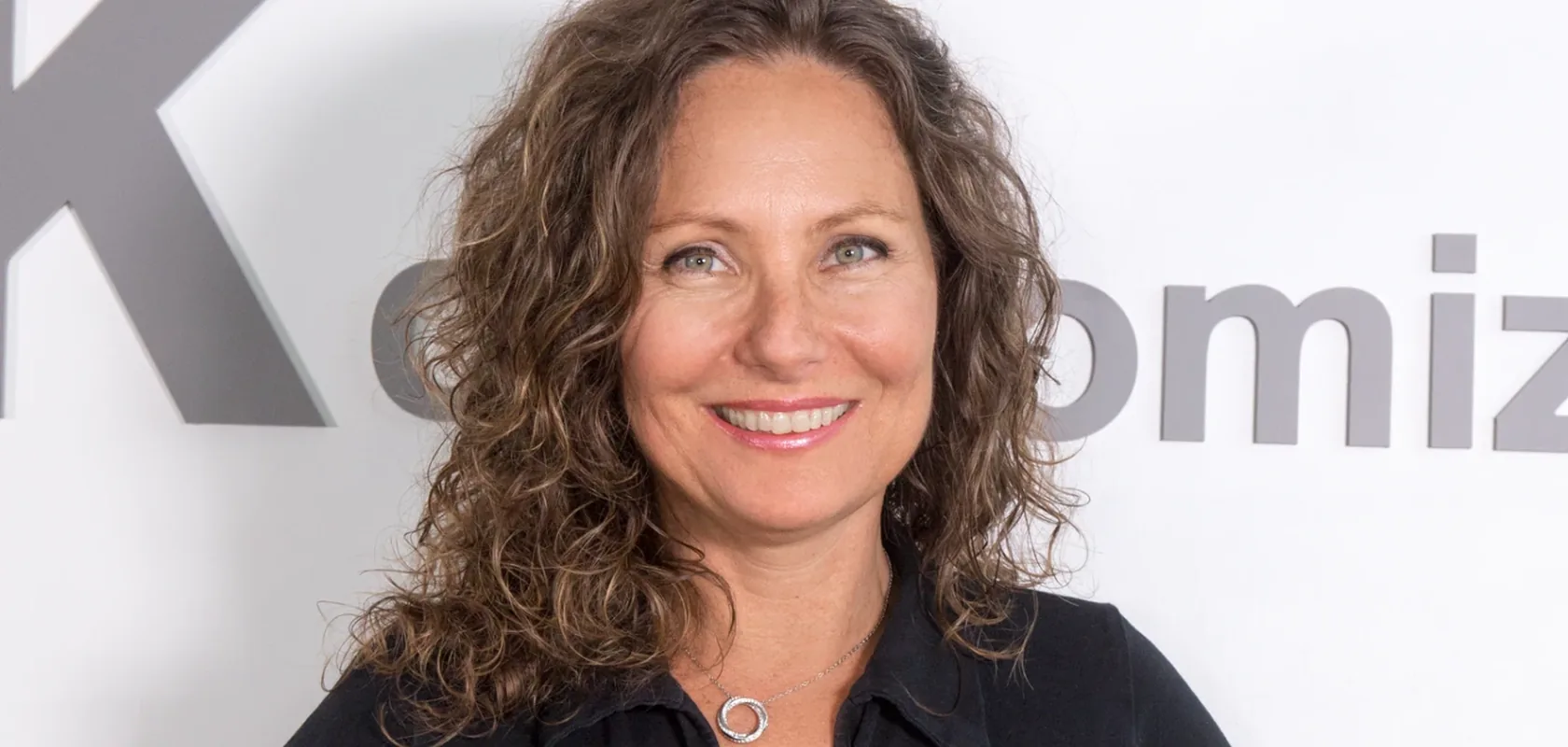
Our very own P20 EMS fitness studio owner Connie Ruiz experienced this herself just last year. Connie has been in the fitness industry for over 30 years, working in health club chains as well as owning and operating boutique gyms for women. For the last 10 years, she has specialized in electronic muscle stimulation (EMS) studios. EMS creates minimal impact on the joints because it relies on electronic stimulation of the muscles during exercise rather than lifting heavy weight. It requires only 20 minutes of exercise, which is equal to 90 minutes of a regular workout.
The wake-up call
Many medical experts advise women to get a DEXA scan for bone density prior to age 65, because bone density silently declines for women in perimenopause and then aggressively declines just after menopause. Connie had her first bone scan in late summer of 2025. She revealed: “I was shocked to learn that I had osteoporosis in my hips and osteopenia in my spine.” This was a “wake-up call” that she hadn’t paid attention to losing bone density at a younger age.
Prior to the scan, Connie did EMS twice a week, took additional group fitness classes like Body Pump and RPM, lifted weights in the gym and walked regularly. Regarding her diet, Connie emphasized whole, anti-inflammatory foods and high protein. She says: “I always focused on muscle. Even with good habits like these, it wasn’t specific enough.”
With regard to her hips, Connie scored -2.9, indicating osteoporosis. In her spine, she scored -1.9, indicating osteopenia. Bone density is measured as a T-score in post-menopausal women and shows how your bone density compares with that of a healthy young adult woman at peak bone density. The lower the score, the weaker your bones and the higher your risk of fractures.
Here’s an easier way to understand the scoring:
| T-score | Classification | What it means |
|---|---|---|
| −1.0 or higher | Normal | Healthy bone density |
| Between −1.0 and −2.5 | Osteopenia | Lower-than-normal bone density |
| −2.5 or lower | Osteoporosis | Significantly reduced bone density |
So how did Connie react to this gut punch? She remembers: “At first I was shocked, but then because I’m from the fitness industry, I knew it’s never too late to build muscle and bone density. I knew it was reversible.”
The new plan: impact, heavier lifting and a bone-building diet
Connie started learning from different industry experts on longevity, such as Dr. Stacy Sims, Dr. Vonda Wright, Prof. Belinda Beck of the LIFTMOR study and Dr. Doug Lucas. She maintained her EMS twice a week but switched to the P20 HIIT program, which combines strength with cardio and allows for impact jump training. She lifted heavier weights and compound movements for her additional workout in the gym and added one more cardio workout focused on sprint intervals.
Most importantly, Connie added jump training, which she had never intentionally incorporated before. She specifically consulted research from Tracey Clissold and used the Osteogains program to learn how to embrace a daily jumping routine.
With regard to her diet, she added more protein, creatine, boron and calcium-rich foods designed for building bone density.
The results, not even a year later
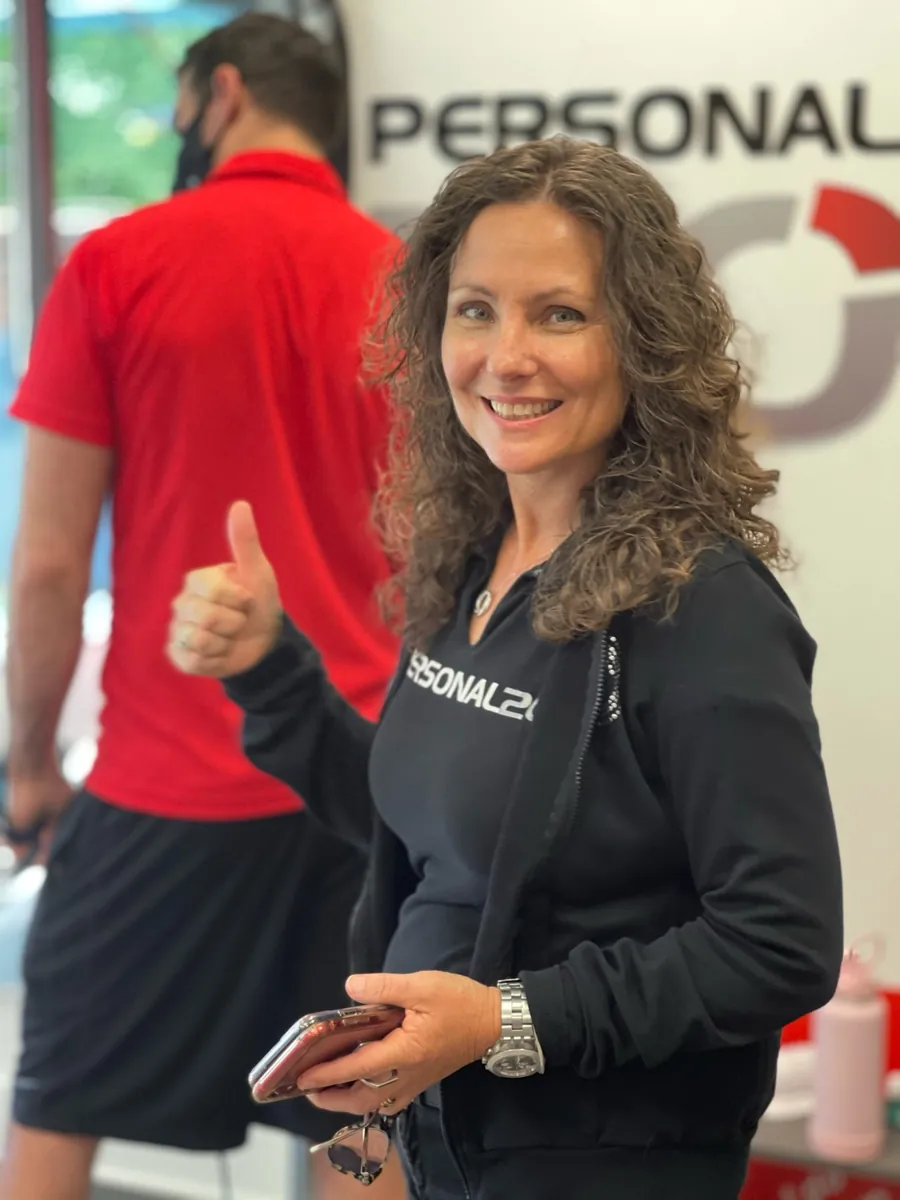
Connie has had fantastic results. The T-score from her hips went from -2.9 to -2.4, dropping her into the category for osteopenia. In her spine, her T-score went from -1.9 to -1.7; while this T-score is still considered osteopenia, Connie is making significant progress.
| Before (summer 2025) | After (under a year later) | |
|---|---|---|
| Hips | −2.9 (osteoporosis) | −2.4 (osteopenia) |
| Spine | −1.9 (osteopenia) | −1.7 (osteopenia) |
Connie credits her EMS workouts as a large part of her success. Because she switched to the P20 HIIT program, Connie conveniently knocked out two strength and two HIIT workouts in only two 20-minute sessions a week. She only had to add one more strength session per week and make sure she got her jump training done. For her, “P20 solved that for two of my sessions in a quick, time-efficient way. I could do it all: heart rate, jump training and lifting.” Even with her new focus on HIIT and heart rate, she still gained three pounds of muscle and can now deadlift 100 pounds, in only seven months.
Staying disciplined and consistent
Now that she’s had some success reversing her diagnosis, Connie believes “staying disciplined and consistent is key.” She still strives for one or two EMS sessions a week, still primarily doing the HIIT program. Connie has also maintained the third strength session, the additional jump training session and her commitment to the new diet.
Connie’s journey is a powerful reminder that receiving news of a difficult diagnosis doesn’t have to be the final word. Her advice? Get informed, let science guide your approach to exercise and nutrition, and take an active role in your health. With the right knowledge and the right support, including EMS, your diagnosis may be the beginning of a new chapter, not the end of the story.
This story is for general information only and is not medical advice. Talk to your doctor about bone density testing and before starting any new exercise or supplement routine.